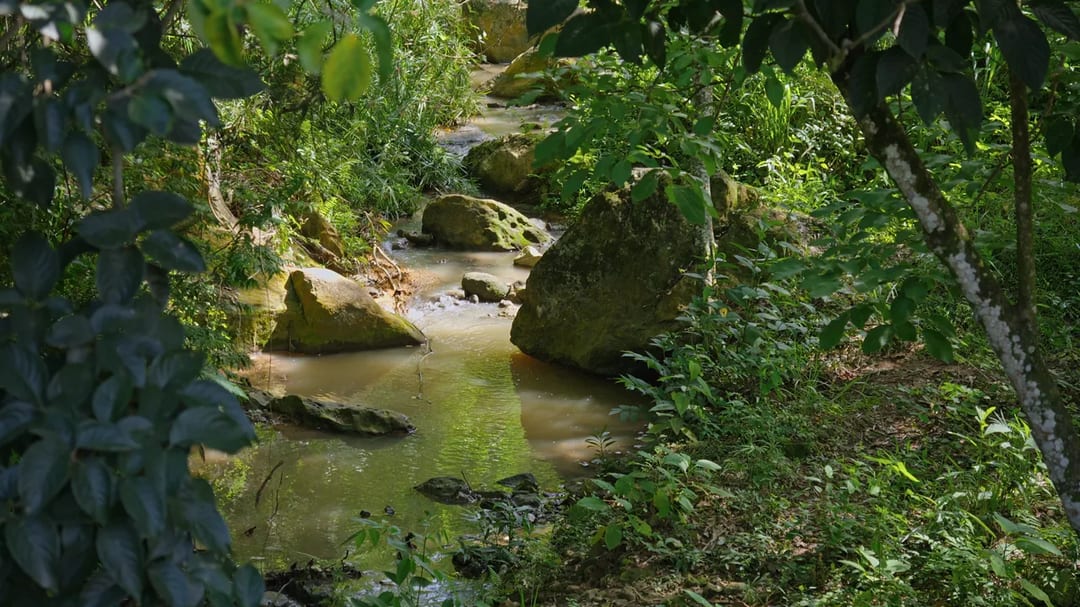
In Barichara, a town known for its remarkable architectural heritage, there is also a natural treasure that deserves the same recognition and protection: the dry tropical forest. This ecosystem, one of the most threatened on the planet, lies at the heart of what is known as the Green Belt of Barichara. In this article I want to set out why this natural space is fundamental to environmental conservation, to life and to the ecological balance of the region, and how we can act as a community to protect it.
What is a green belt?
A green belt is a band of protected vegetation surrounding an urban area, intended to contain unchecked growth of the town, preserve natural spaces and maintain the quality of life of the people who live there. It is more than a physical boundary: a green belt works as a lung for the town, protecting vital resources and supporting local biodiversity.
In Barichara’s case, the Green Belt consists mainly of dry tropical forest, an ecosystem that, although it has lost much of its original extent, remains an indispensable refuge for local flora and fauna as well as an essential regulator of water and soils.
Green belts elsewhere in the world
Green belts are neither a new idea nor one unique to Barichara. They exist in many parts of the world where towns and cities have recognised the importance of protecting natural areas around their urban limits. These examples demonstrate that preserving such spaces helps mitigate pollution, conserve water and biodiversity, and offer communities somewhere to spend time outdoors.
Drawing on those experiences, Barichara has both the opportunity and the responsibility to consolidate a green belt of its own, treating the dry forest as strategic and vital natural heritage.
The environmental benefits of a green belt
The Green Belt of Barichara delivers a range of environmental benefits that bear directly on the quality of life of its residents:
Protection of water resources: the dry forest acts as a natural sponge that captures and regulates water, securing supply for human consumption, for agriculture and for the maintenance of ecosystems. Conservation of biodiversity: this ecosystem shelters unique species adapted to dry conditions, many of them at risk of extinction. Revitalisation of the soil: vegetation helps prevent erosion, improves nutrient retention and maintains the fertility of the ground. Mitigation of climate change: the trees and plants of the green belt capture carbon and regulate the local temperature.
Taken together, these make it clear that the green belt is not simply a natural area but a living system that sustains life and ecological balance across the territory.
Water resources in Barichara
Water is one of the most valuable and most vulnerable resources in Barichara. The ecologist Irina Mendoza explains that the dry forest plays a fundamental role in recharging aquifers and in regulating both the quantity and the quality of the water available. Without that natural protection, water could become scarce or contaminated, affecting people and agricultural production alike.
At present the availability of water in Barichara is limited, and depends heavily on conserving the forest and its soils to keep the water cycle healthy.
Strategies for conserving water and forest
Securing a future with water and life means putting conservation strategies in place urgently, involving the authorities and the wider community alike. Some of the key actions include:
Halting unchecked urban growth: preventing the spread of construction into the green belt and the dry forest, and respecting natural limits. Promoting reforestation and restoration: planting native species that help recover degraded areas and strengthen the structure of the forest. Encouraging environmental education: helping the community understand the importance of the dry forest and how their own actions bear on its conservation. Advancing public policy: creating and enforcing rules that protect the green belt and promote the sustainable use of resources.
These measures are a call to action for everyone in Barichara, those who live inside the town (patiamarillas) and those in the surrounding countryside (patiafueras) alike, to care together for the natural heritage we have inherited.
Frequently asked questions about the Green Belt and the dry forest
Because it is one of the most threatened ecosystems on the planet, and it plays a crucial part in conserving water, biodiversity and soil health across the region.
Unchecked urban growth, deforestation, pollution and a lack of environmental awareness are the main threats endangering this natural space.
By taking part in reforestation activities, supporting environmental protection policies, resisting illegal urban expansion, and promoting the care of water and soil.
The dry forest helps capture and regulate rainwater, contributing to aquifer recharge and securing a steady, clean supply for the community.
Yes: with conservation, restoration and community commitment, the dry forest can recover and maintain its vitality for future generations.
Conclusion: a call to care for our natural heritage
In its Green Belt and its dry forest, Barichara holds natural heritage of incalculable value: it does not merely make the territory beautiful, it sustains the life and wellbeing of everyone who lives on this land. Protecting this ecosystem is a collective responsibility, one that asks us to make conscious decisions, to halt unchecked urban growth, and to build a more harmonious relationship with nature.
This is a call to everyone who loves Barichara, to work together to conserve and revalue our dry forest, securing a future with water, with life, and with firm roots in our territory.
Let us care for and revitalise the Green Belt of Barichara, heritage we are called to protect and to celebrate.