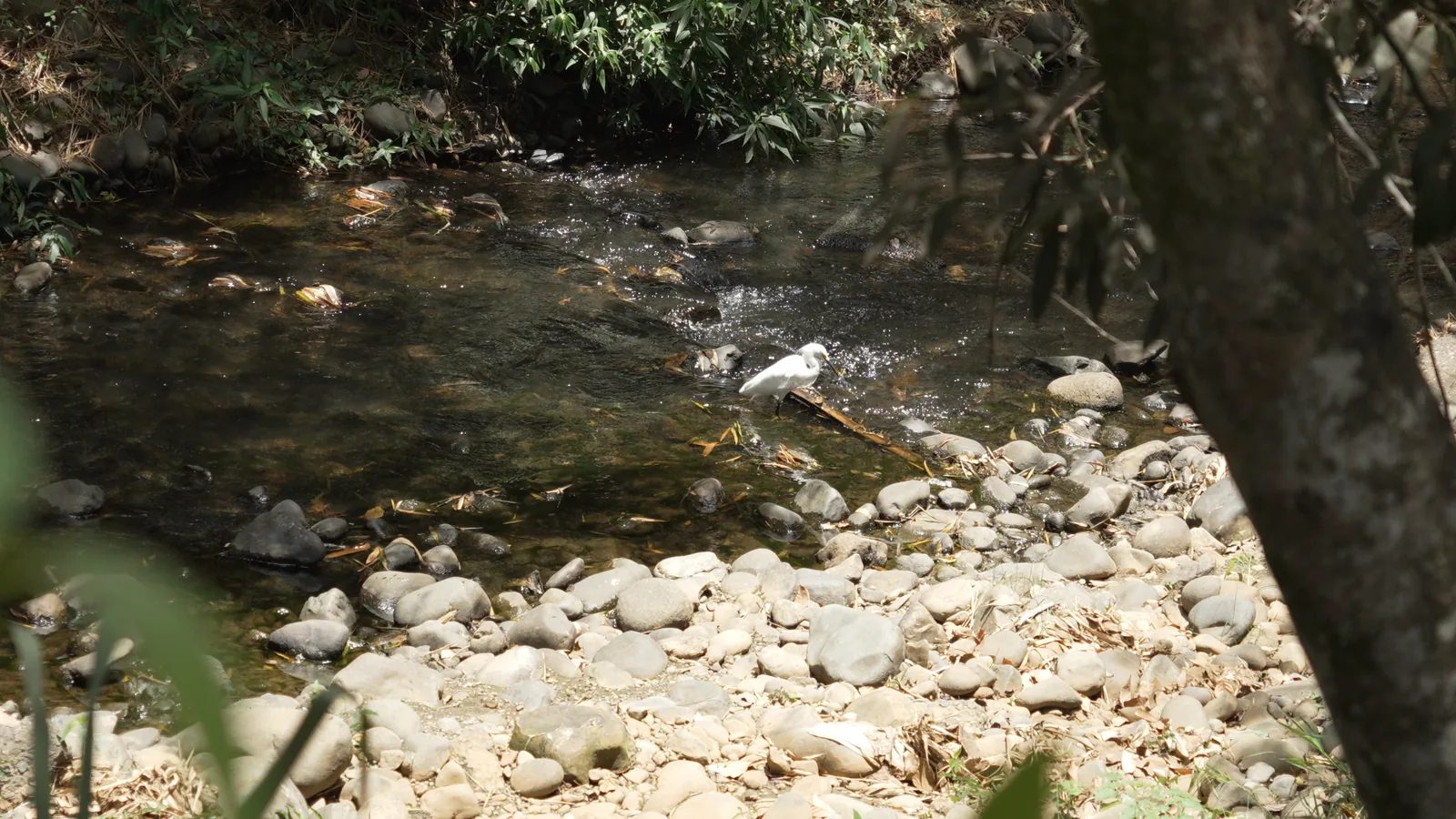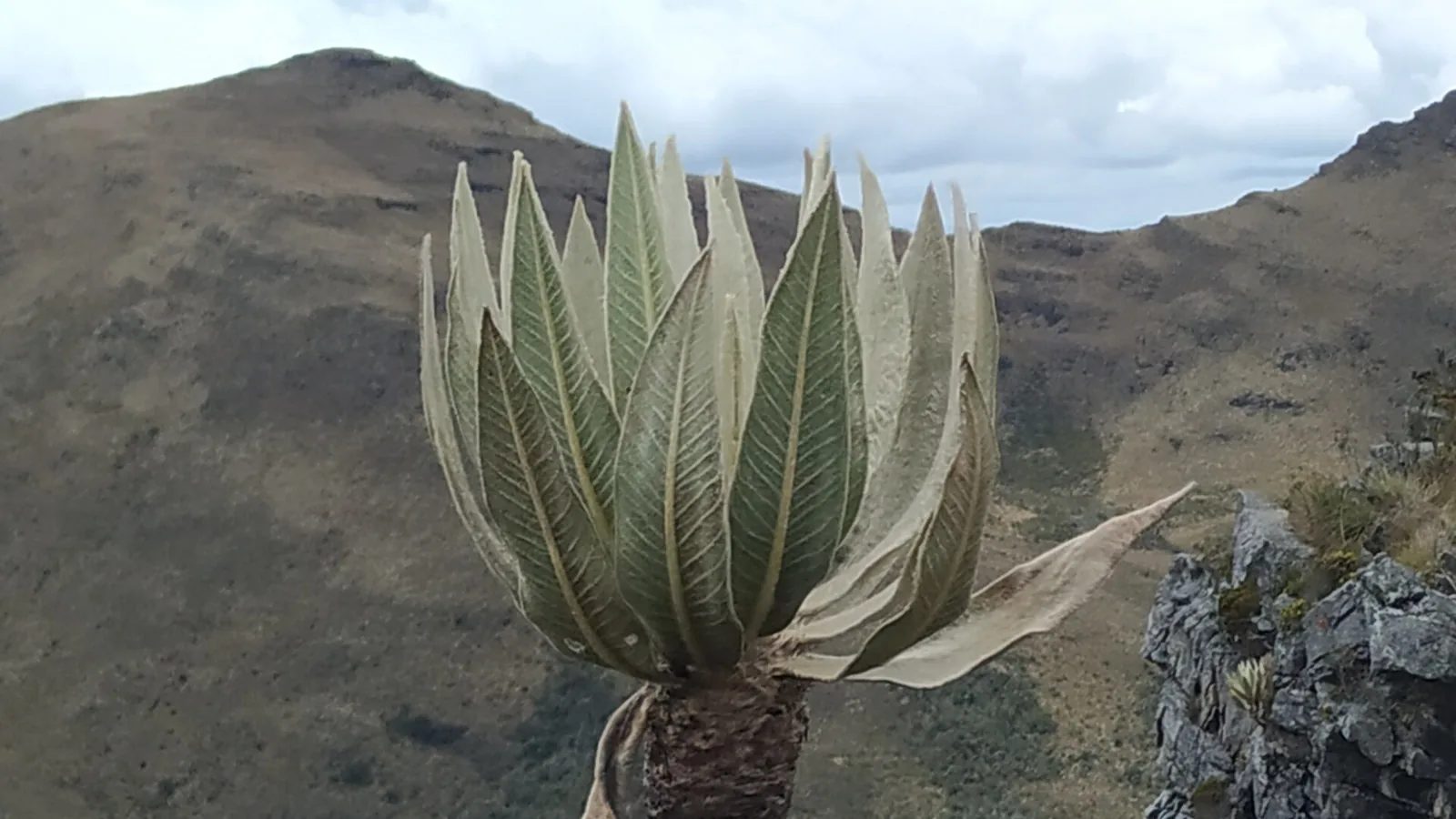
The series opens with a simple question: the water you drank today, where did it come from? The quick answer is “the tap”. The long answer is the one that matters. Before it reached the tap, that water fell on a mountain, ran down a stream and crossed soils, forests and pastures. That path has a shape, and that shape is where a bioregion begins.
A line nobody drew
Picture the ridge of a mountain. A drop that falls on one side runs down into one valley; a drop that falls on the other side runs into another. That watershed divide is a real boundary, even though it appears on no political map. No parliament or treaty decided it. Gravity and terrain drew it.
The maps we use every day tell a different story. Provinces, municipalities and countries are lines drawn by people, often far from the place and for other purposes. Those maps are useful for collecting taxes or holding elections, but they say very little about where water comes from or what can grow somewhere. Reading a territory through its water is a way of telling a different story about the same ground.
From a drop of water to a culture
The path of water decides far more than water. Altitude, rainfall and soil shape which plants grow in a place and which do not. With those plants, people learn to eat in a certain way, to build their houses in a certain way and to heal themselves in a certain way. Land and water bring life; life brings culture. One layer on top of the other.
That is why a bioregion is not only an ecological idea. It is a territory that shares a natural history, its waters and a web of life, and, within that web, the ways people have learned to live in it.
Why it matters for regeneration
When an environmental problem is seen from inside a municipal border, it is almost always cut in half. The river that dries up downstream began drying upstream, in another jurisdiction. The forest that protects a spring does not belong to the town that drinks from it. The bioregion is the scale at which those pieces fit together again, and so it is the scale at which talking about regeneration makes sense.
This series grows from that idea. We want to understand the territory we live in through its water rather than its borders, and to meet the people who are caring for it. We start with the basics, because all of us live in a bioregion, even if we have never named it.
Something to think about
What is the name of the river closest to where you live? Do you know which mountain it rises on? If you don’t, you are not alone: almost nobody does. Finding the answer is the first step towards seeing your bioregion.
In the next episode we zoom out to the large scale: the bioregion of the Northern Andes.
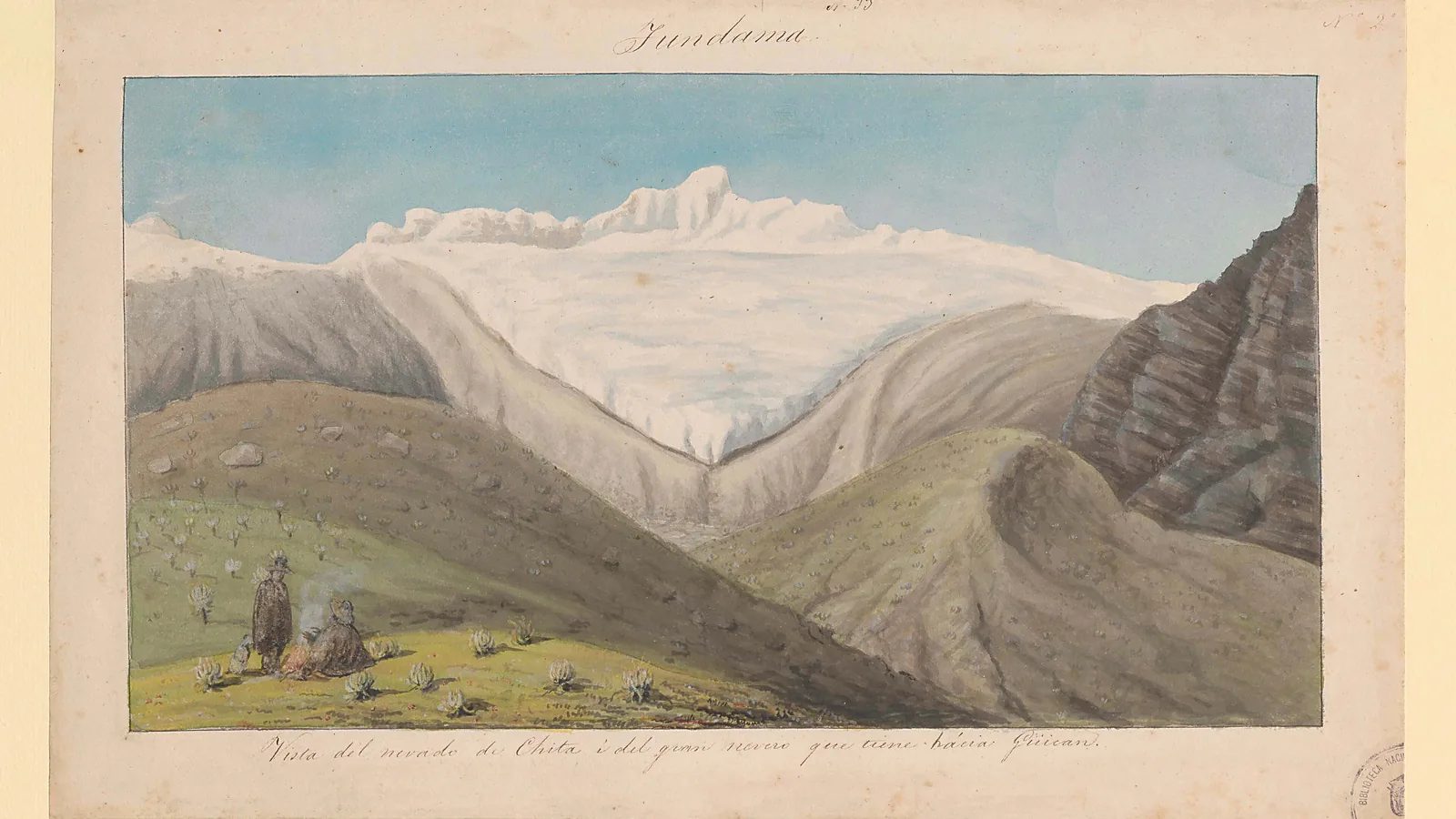
Image: Carmelo Fernández, View of the Chita snow peak, 1850. Comisión Corográfica, Biblioteca Nacional de Colombia (public domain).