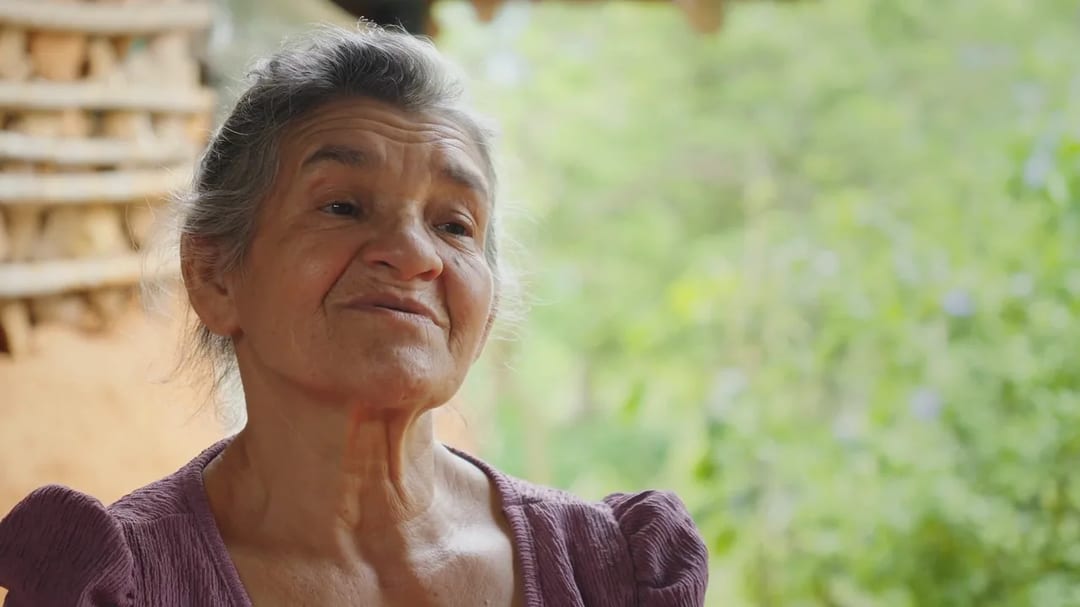
In the hamlet of Lubigará, Celina Ballesteros has spent since 2006 caring for a patch of land that arrived exhausted and today gives lemons, mandarins and mangoes. This is not a story about yields. It is about a woman who decided the land that holds her up still has a future, and that the future is not hers alone.
Land worked to nothing
Celina and her family, like so many others, left young for the coast and came back when the going got hard. They found the ground spent. For years it had been planted in monoculture (tobacco, sorghum, cassava, maize), and in quantity. “The land was left completely sterilised,” she says.
What had changed was not only the soil. When she was growing up there was no electricity and no mains water: they lit the house with a candle or a petrol lamp, and the water was whatever the land gave. Now water comes from the town. “These days we’re in the city and in the countryside at the same time,” she says. “But between the two, I stay with my countryside.”
Finding syntropic farming
The change came through a syntropic agriculture course. One specific thing caught her attention immediately: it does without the fertilisers she had always used. “They look like they’re helping, but they kill things then and there, and afterwards they destroy the soil.”
She has planted by that logic ever since. Every division on the smallholding is a living fence rather than a stone wall: prickly pear, fique, matarratón, and the tree they call San Vicente locally and indio desnudo in syntropic circles. Each does more than one job. Matarratón branches feed the goats and its leaves are used for fever; the leaves that fall feed the soil.
Maize, before, was harvested and the rest went to the cow. “With syntropic farming I learned that isn’t much use. It’s for the soil itself. It’s the compost.”
And there is a mandarin tree that nearly died. “I put love into it myself, with the pruning and the syntropic method, and now it’s given me this little harvest.”
Water comes first, and water is what is missing
The great problem here is water. The mains supply carries chemicals that burn her crops: once, after a hard dry season, a tanker filled the whole vegetable garden, carrots and all, and by the next morning it had all withered. Since then she waters with what she collects: the water from the bathroom, the water from the kitchen. Her brother, who has a pond to catch rain, grows chard, cauliflower, radish and onions, white and red. She says it without bitterness, as a simple fact: he can, because he has natural water.
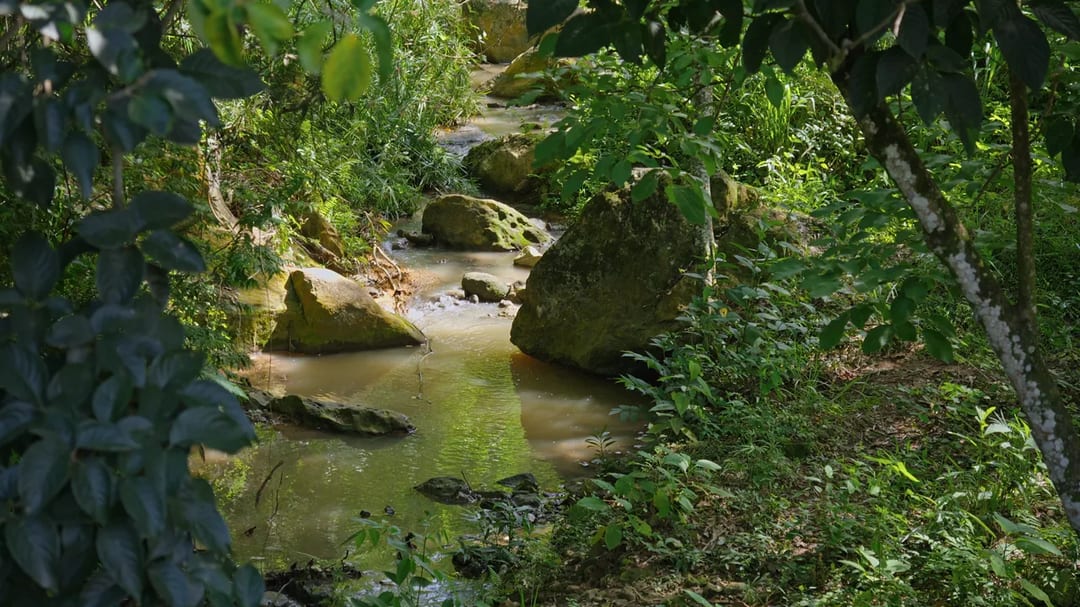
Which is why what really occupies her are the wells. Lubigará once had several; the whole hamlet drew from the well at El Totumo, and there was another on her father’s land that also belonged to everyone. Both dried up. The studies say the water is still there, and can be recovered a little at a time.
She has already “sown water” in two places: on the piece she inherited from her father, and on the land where she lives now. She knows how long it takes. “After five years it’s on the late side. But I say: it doesn’t matter.” And she explains why: “even if I don’t see it, so there’s some there for everyone else afterwards.”
On this she is unbending. “Water is sacred. If you start out from selfishness or envy, it won’t work. Because water is alive.”
None of this is for her alone
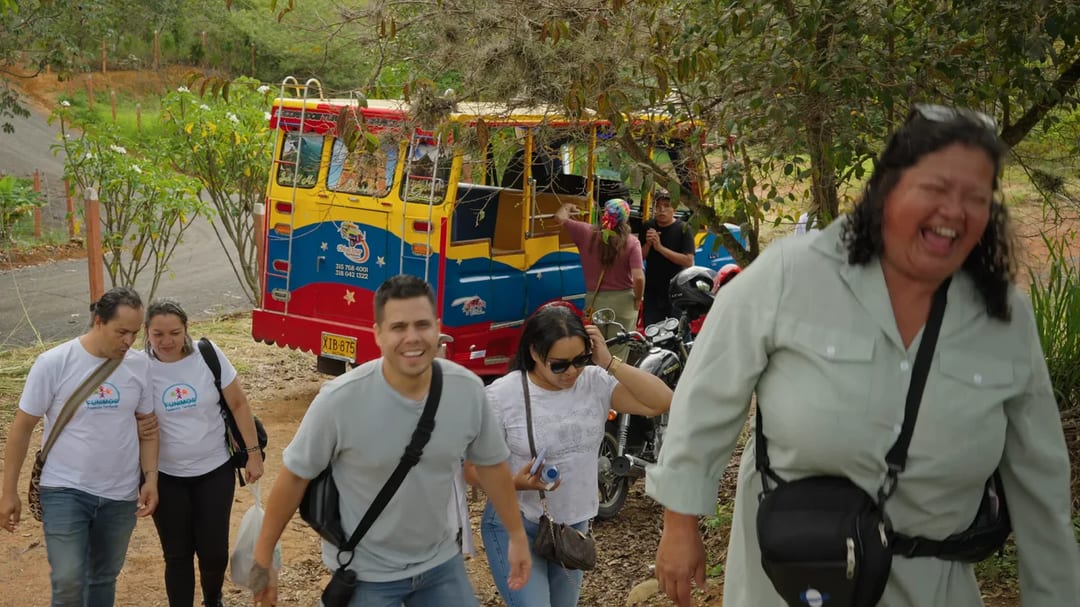
Celina does not want a private model farm. She invited the people of the hamlet to come and see what she was doing, precisely so that it would not be only hers. Three of them have taken it up.
She shares seed with her brother, who also came back to the land and is also getting into syntropic farming: when one of them runs out, the other has some. And she travels. Her husband teases her that she has nothing better to do than visit other people’s hamlets. She answers that every place teaches you something different and yields different seed: wherever she sees a good tree she asks whether it grows from seed or from a cutting, and takes it home to transplant.
The lemons are not sold either. When there is a harvest she gathers them and takes them to the people she knows have none.
The forest coming back, and a health that came back with it
The changes can already be heard. Birds have arrived that were not seen here before (white-tipped doves, partridges, chachalacas) and on the cliff nearby you can hear howler monkeys, which she had never once heard in this hamlet.
Her own health changed too. In 2015 her blood sugar would not drop below four hundred and she had to start on insulin, at twenty-eight units. Today she is on fourteen. She puts it down to food: when she took up syntropic farming, eating became something else entirely. Instead of pills she drinks herbal infusions of mango leaf, guava, soursop and cinnamon, and a pesto she learned to make from the herbs in her own pots: rocket, parsley, spring onion, mint, basil, anise, oregano. “I eat everything natural and nothing does me any harm.”
When she was ill for two months and could not go outside, what she missed most was being out with her young trees, “spoiling them a bit.”
Sowing for a time that has not arrived
Celina does not talk about climate in the abstract. She talks about no longer knowing when the rains come and when the dry season does, about the seasons being “completely changed” from those of her childhood, and about agrochemicals costing more every year until nobody can afford them.
From that comes her reckoning, which points entirely forward: to leave young people fertile ground that can produce their own food, “because supposedly hard times are coming, starting with the water.”
In the meantime she talks to the plants and tells the animals off. Her husband sometimes finds her in conversation with a shrub. She does not apologise for it.
Her dream she puts in a single sentence, and it is a dream of shade that does not exist yet: that when the heat is at its worst, the trees will already be tall, and she will come and rest there.