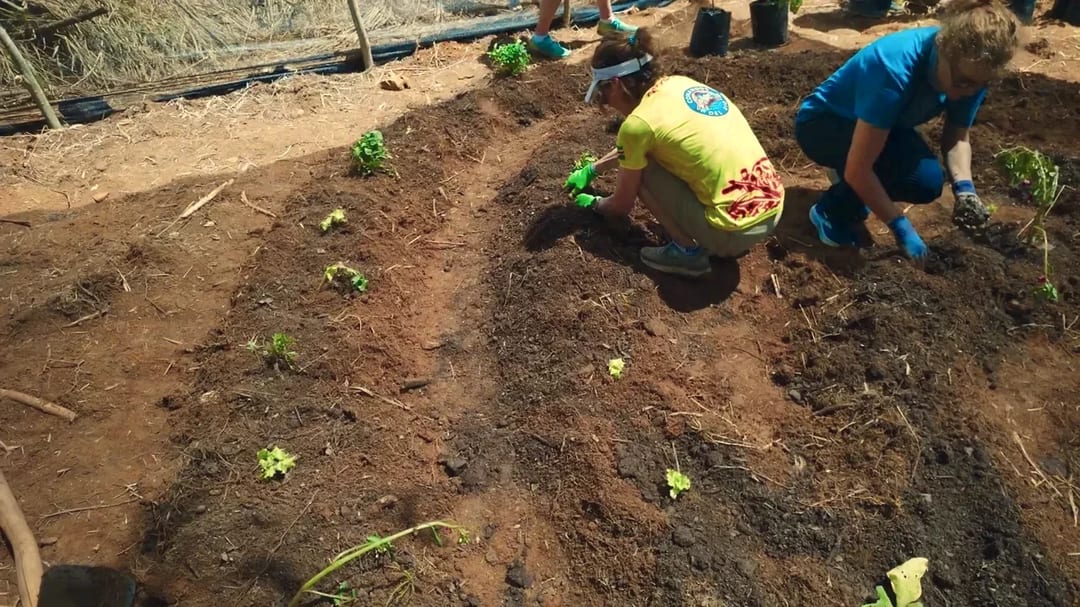
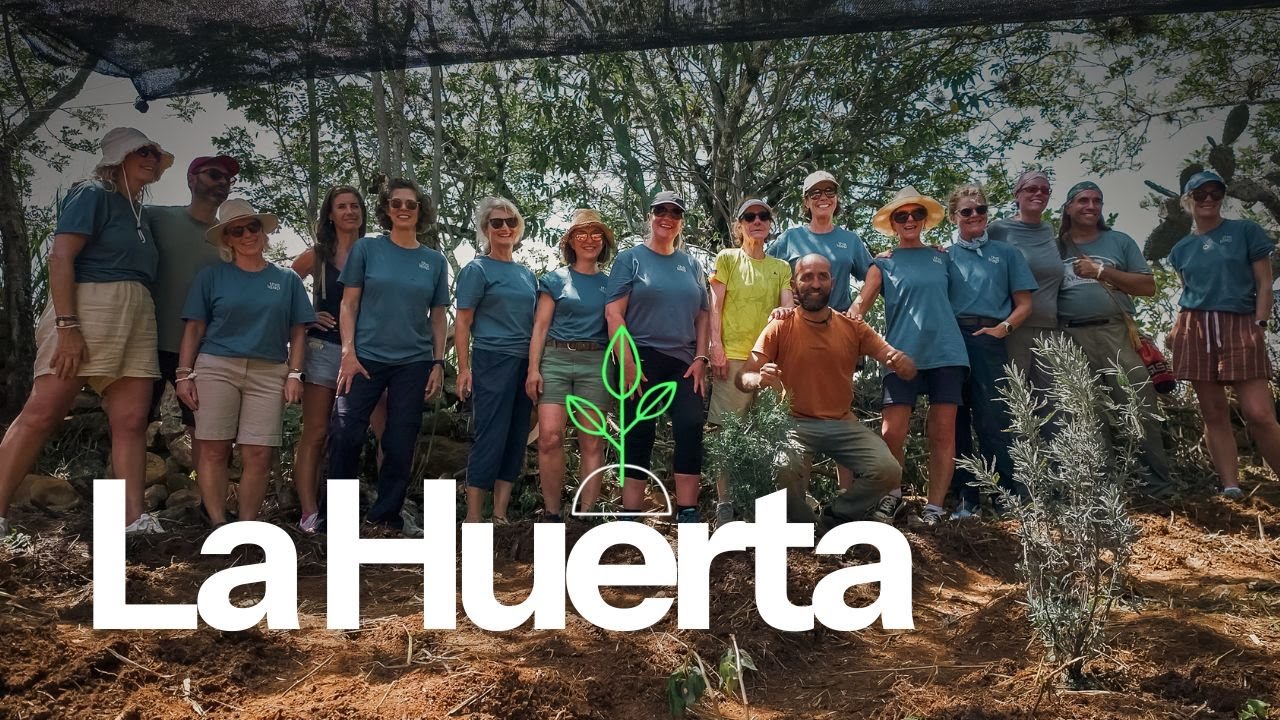
Opposite the Bioparque in Barichara there is a patch of ground that had lain sleeping for a long time, among old ruins and stones that still hold memory. A group of women gathered there, accompanied by Jonatán Mojica and the Consciencias del Territorio programme of Sueños del Bosque, to turn it into a community garden. The first thing they did was not to dig.
Asking permission
Before touching the earth, you ask permission. The place is honoured with fire, with tobacco, with cotton and with silence. This is not decorative preamble: it sets the terms for everything that follows. “Everything born here is born with intention.”
Regeneration, read this way, does not begin with the tool. It begins with listening, with thanks, and with letting the ground say something before anyone decides what to do with it.
Cotton, the first teacher of the day
The first plant of the day was cotton, an ancestral plant of the Guane people, a symbol of softness and of resilience. It was not sown. It was spun.
The instruction was simple and not remotely trivial. “We’re going to make a path, thinking about what I want to leave to the world, what I want to do in the world, to give from my heart. We’ll make this little path thinking about that, while I wind it.”
They say cotton keeps whatever you are thinking while you work it. So before spinning, you think with love. Each thread became a wish, and each bracelet an offering.
The ground chose its own shape
The layout of the garden did not arrive pre-drawn. It came out of looking at the ground together.
They talked about the spiral, which for Indigenous peoples is a figure of origin and of ending: it begins and ends at a point, and where it ends it starts again. They tried heart shapes, triangles, straight beds. In the end they decided to plant a heart and an infinity sign: the heart for care, the infinity for the flow of life.
Tobacco, herbs and food
If the cotton settled the intentions, the tobacco opened the door to planting: a sacred plant that heals, protects and connects. It was transplanted first, alongside the cotton, as guardians of the territory; then came the aromatic herbs and the food plants that will sustain the garden.
The seed was not ordinary seed. It was saved seed, seed that already knows this ground: it has a history, and it knows how to flower where the sun is hot and the soil opens. The idea that travels with it is that seed memorises what happens in a place and is reborn carrying that information. It was sown with words of encouragement.
A living school
Among those taking part were women who had come a long way, from other landscapes and other rhythms, with a genuine wish to offer something to this yellow earth. They played, they named themselves, they laughed: through the body and through movement, they remembered that learning can be a joy.
What was left behind is not only a growing space. It is a living school and a seed of a future: every word stayed in the soil, and every gesture in the memory of the place. And, as tends to happen on days like this, those who sow also sow themselves.
In the ruins, life comes up again.