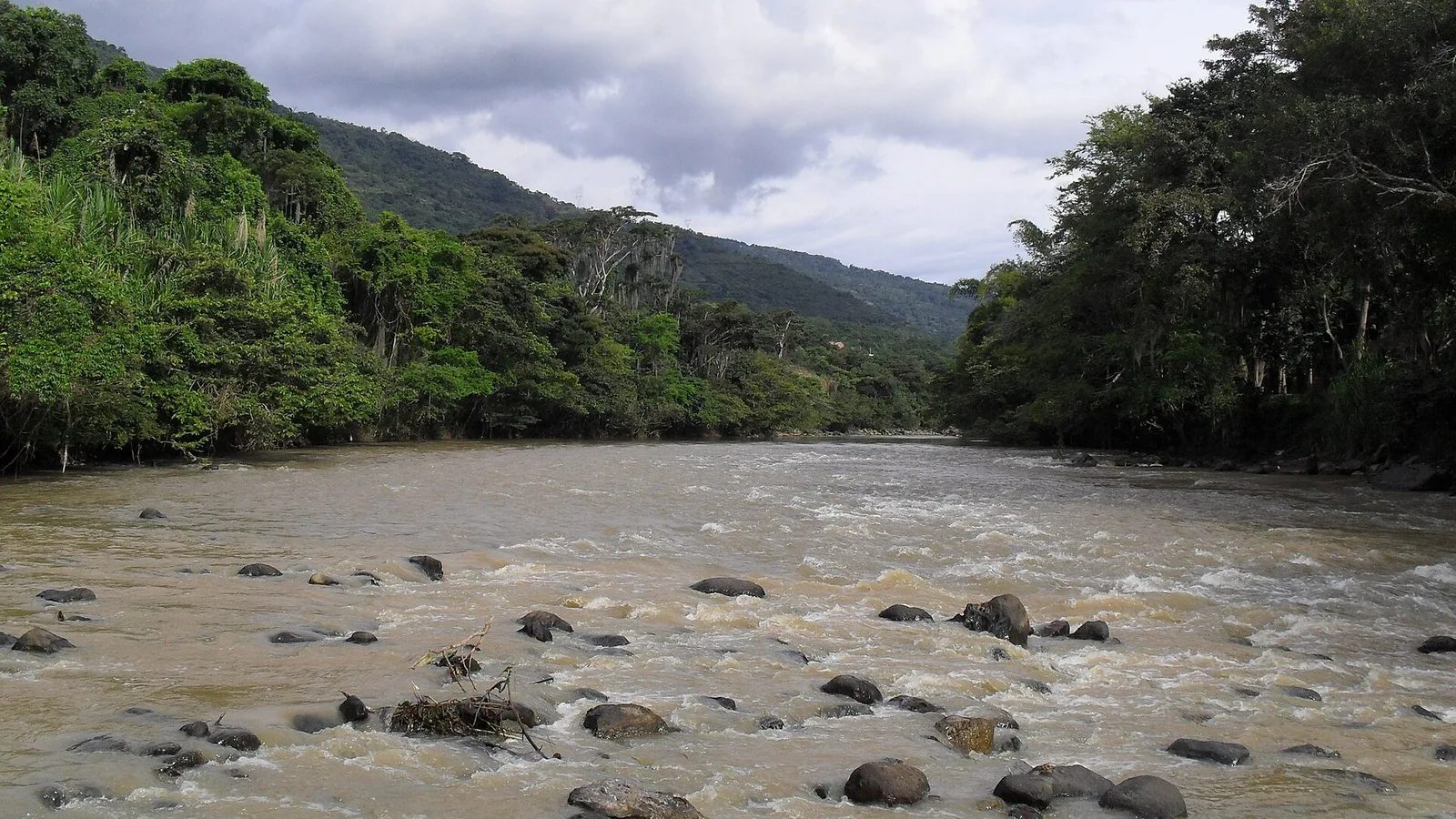
The río Meléndez rises at 3,019 metres above sea level, among the Andean forests of the vereda La Candelaria, inside the Farallones de Cali National Natural Park. From high up there, it flows down through the rural districts of Villa Carmelo and La Buitrera until it enters the south of the city. It is one of six rivers that come down from the Western Andes and cross Cali, along with the Aguacatal, the Cali, the Cañaveralejo, the Lili, and the Pance. Farther on, its waters join a network of rivers and canals that eventually reaches the Cauca River.

Along much of its course through the city, the river has been altered. Yet as it passes through the Multicentro area, in comuna 17, it keeps its natural bed and shape because that stretch was never channelled. That bank once belonged to the Ingenio Meléndez and was planted with sugarcane from before the 1950s. Over time it turned into a green patch of grass with a few trees, beside a river that almost nobody looked at.
Nadia Estrada, a neighbour, used to pick up trash from the river when nobody else was doing it. Libardo Vázquez remembers her this way: “She was, I think, the only person who cared about this forest. When I met her, I told her I was going to join her.” Later came Humberto Ortiz, who used to go out to walk his dog and ended up photographing birds. Paola Giraldo used to run around the forest: “Whenever I ran, I thought about gardens.” And Nelson Gómez saw some men watering trees and walked over: “I always wanted to have a nature reserve, but since I did not have the means, I said to myself: well, here is a space I can help care for.” None of them arrived with a plan, but they stayed on.
They called themselves forest guardians and set their own rules. They started planting trees and built a compost bin, and they made gardens for the bees and butterflies. When the 2026 drought hit, they went out to water the drying trees one by one. In September of that same year, fire burned part of the bamboo grove, and they kept caring for the forest.
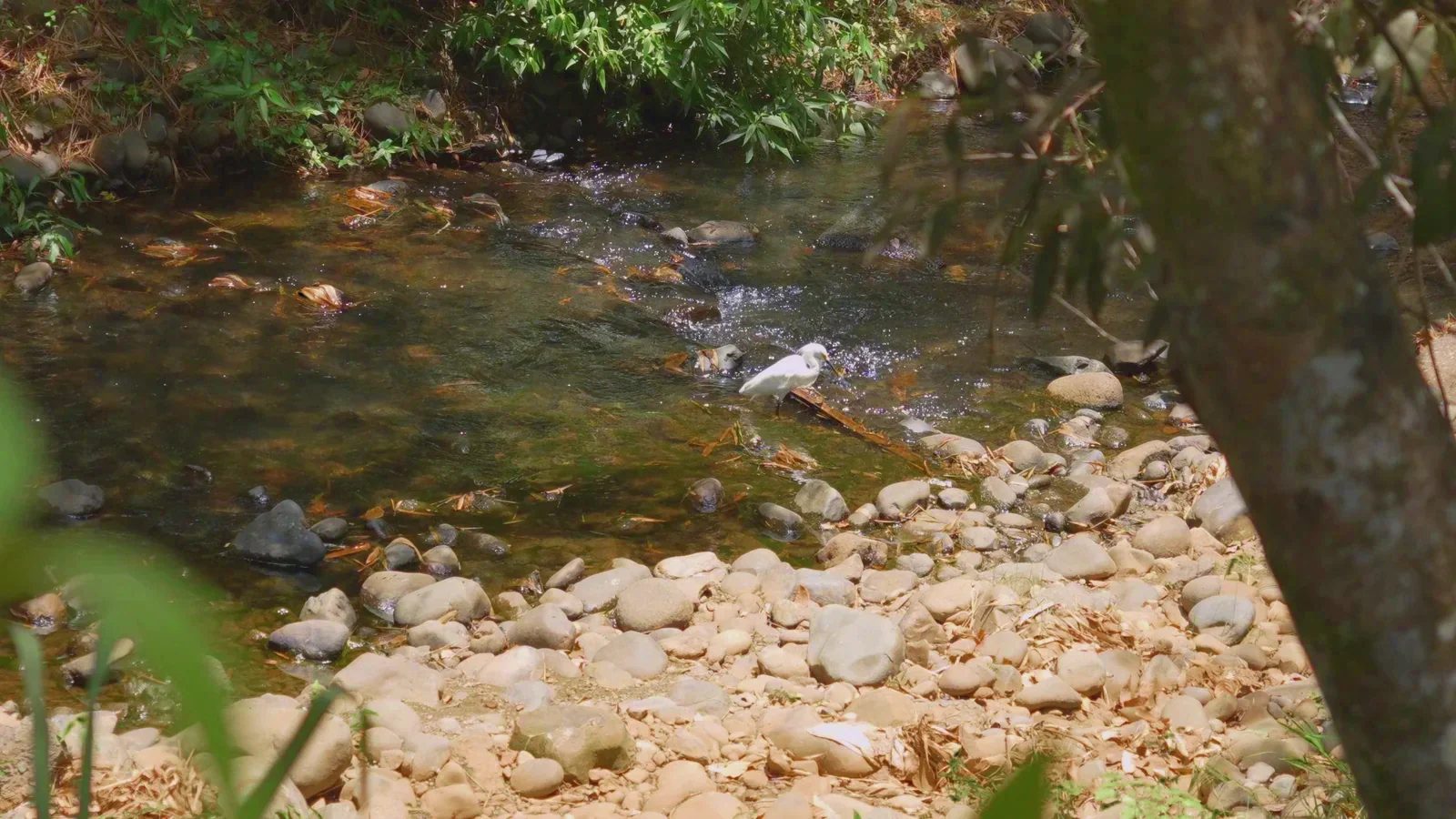
Today the Bosque Urbano Multicentro is recognised as an ecological corridor and a protective forest area for the río Meléndez. Humberto explains it in his own way: “The río Meléndez is barely fifteen kilometers from the Farallones, and for a bird to travel fifteen kilometers, it does that in half an hour. That is why this is a corridor.” In the forest, 118 bird species have been recorded. Among the branches and along the bank you can see herons, parrots, kingfishers, and woodpeckers. Sabaleta fish swim in the water, and as night falls a few mammals appear. Neighbours say that once they even managed to spot otters.
If you walked upstream along the river closest to your home, which mountain would you reach?
This text is part of a series on the rivers of the Northern Andes and the people who care for them. Watch episode 4 of the Bioregions Series, “The City Is a Bioregion Too”, on YouTube or Instagram, and the mini documentary “Urban Forests of Cali” on YouTube or Instagram. With Libardo Vázquez, Nelson Gómez, Paola Giraldo and Humberto Ortiz, forest guardians of the Bosque Urbano Multicentro.